
Parents · The teenage brain

Why a risk can look different to a teenager in the moment.

Development does not make unsafe behaviour inevitable. It helps explain why excitement, emotion and peer approval can sometimes outweigh a risk a young person understands.

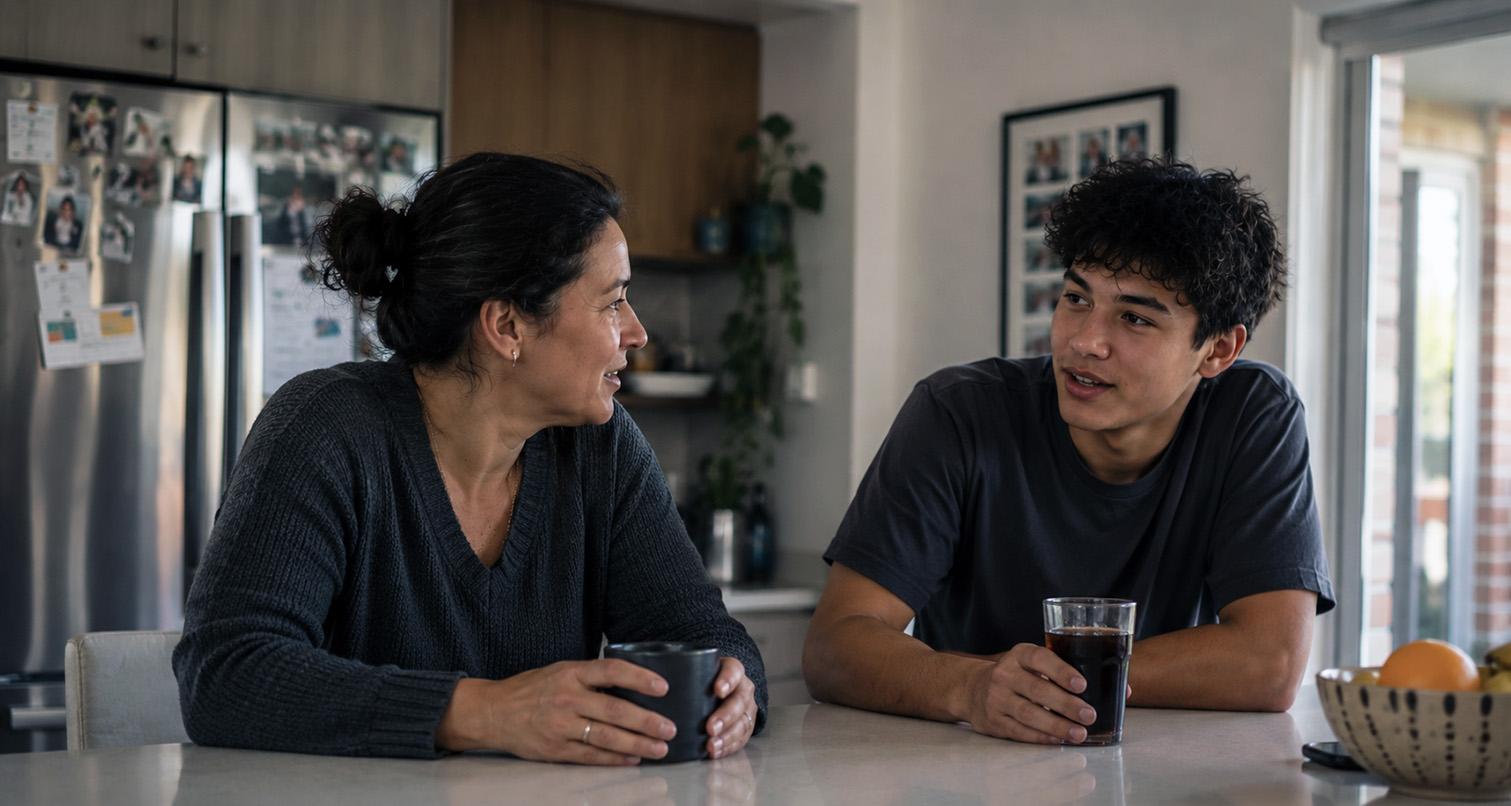
A parent listening to a teenager during a conversation

Development and context

Knowing and applying are different tasks.

A young person may be able to explain a safe choice in a calm setting and still struggle to apply it quickly when friends, urgency or strong emotion are present.

That gap is a reason to practise decisions and responses. It is not a reason to dismiss teenagers as reckless.

Peer influence

Prepare words before they are needed.

It is easier to leave a difficult situation when an acceptable explanation or exit has already been discussed. Families can agree on a no-questions-asked call, a code word or a practical reason a young person can use with friends.

Make pressure discussableTreat the wish to belong as real rather than as a character flaw.
Rehearse a responseGive the young person language they can use without inventing it under pressure.
Keep an exit availableAgree how they can call for help when a plan becomes unsafe.

Build capability

Independence can grow in steps.

Gradual exposure, reflection and clear expectations allow experience to grow without treating independence as all-or-nothing.

The strongest conversations remain calm enough for a young person to describe close calls and uncertainty honestly.

Next step

Next: use the learner stage well.

Make supervised driving preparation for independent decisions, not only preparation for a test.